
Knee Issues? Look to Your Feet.
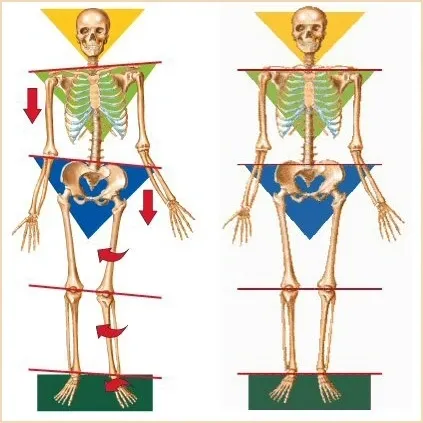
When we think about knee pain or knee issues, we often focus on the knees themselves and common issues like arthritis, overuse, or a past injury. But what if the root cause of your knee pain isn’t just your knee? What if the problem lies beneath, in your feet? Remember the children’s song the “Skeleton Dance” when they sing about basic anatomy, “the foot bones, connected to the leg bone, the leg bone is connected to the knee bone”. Well, it is true. Our body is all connected and believe it or not, the condition of your shoes effects your feet and could be playing a huge role in your knee health. Therefore if you have knee issues? Look to your feet.
Shoes
Much like a car depends on its tires to roll smoothly, your body depends on your feet to carry you through every step, stride, and sprint. If your shoes are worn unevenly, it’s like driving a car with tires that have uneven tread. Imagine your tires dragging on one side after hitting a pothole or losing pressure—it causes imbalance, stress, and even damage to other parts of the car. In the same way, worn or improperly chosen shoes can lead to improper gait and alignment and knee pain or back pain.
The Importance of Proper Tread
The tread on your shoes is similar to the tread on car tires. It provides traction and ensures that every step you take is stable and aligned with your natural gait. Over time, if your shoes lose their tread, you may start to notice that your balance feels off or you’re leaning more on one side. This leads to improper pressure distribution, and over time, your body compensates for that imbalance. The result? Uneven wear on your knees, joint pain, and discomfort during daily activities.
Why Old Sneakers or the Wrong Pair Can Be Problematic
According to many podiatrists, old sneakers are often the culprit. Over time, the cushion inside your shoes can flatten, the tread can wear down, and the arch support may become insufficient. For some people, even wearing sneakers meant for one activity (like running) for a completely different purpose (like walking) can create misalignment and cause damage to your joints.
If your shoes are not providing the support they once did or are designed for an activity other than what you’re doing (think running shoes for hiking or flat-soled shoes for walking), your feet aren’t getting the proper alignment. This can throw off your entire kinetic chain, which starts at the foot and travels all the way up to your knees, hips, and back.
The Knee Pain Connection
Your knees are particularly vulnerable to improper alignment and faulty tread. If your shoes are worn unevenly, or if they don’t provide the necessary support, they can alter your gait. This can cause overpronation (where your foot rolls inward too much), supination (where your foot rolls outward), or simply make you walk in a way that puts excess pressure on one side of your body. The result is that your knees are forced to absorb this unnatural movement, leading to pain, inflammation, and sometimes even long-term injury.
Sit Down, Look Down.
Here’s how you can check if your shoes are contributing to your knee issues:
- Check the tread: Take a look at the bottoms of your shoes. Are they worn unevenly? Do they have visible holes or flat spots? If so, your shoes could be causing instability in your gait.
- Examine the cushion: If the cushion in your shoes feels flattened, it might not be providing enough support. A shoe with insufficient cushioning can lead to pressure on your joints, especially if you’re walking or running for extended periods.
- Assess the arch support: If your shoes have little to no arch support, they might be contributing to overpronation or supination, which could stress your knees.
What to Do About It
- Replace worn-out shoes regularly: If your shoes are old or unevenly worn, it’s time to replace them. Make sure to choose shoes that fit the specific activity you’re doing. Running shoes for running, walking shoes for walking, etc.
- Get newly checked: Our feet change in various stages of life therefore getting re-fitted for size and width for sneakers once a year is a good idea.
- Pay attention to your posture and stride: Ensure you’re walking and running with proper form. If you notice any discomfort or imbalances, work with a professional to adjust your posture.
- Get your feet assessed: Consider visiting a podiatrist or getting a gait analysis at a shoe store that specializes in running shoes. They can help you determine if you need custom orthotics or if a different shoe will better support your feet and knees. In an article by a friend of mine podiatrist, Dr. Wendy Stinson she speaks on additional treatment for flat feet.If your feet are not causing a disfunction there can also be weakness in your glutes.
- Exercise safely and correctly. Pay special attention to how your feet connect to the floor especially in repetitive movements like walking, running or hiking.
- Rest. If you are in acute pain, it is important to rest. Do not try to “work through it”. If it lasts more than a day or two reach out to your podiatrist.
The next time you’re dealing with knee pain, look to your feet! Just like a car needs proper tires to avoid dragging or misalignment, your body needs shoes that offer the right support, cushion, and tread to keep everything in balance. Investing in the right shoes can not only improve your comfort, but also prevent further knee damage down the road. So, before you blame your knees, look down at your feet—you might be surprised at what you find! Need help with exerises to help strenghten or stretch your feet ankles or knees, reach out for a personal training session. We would be happy to help.